
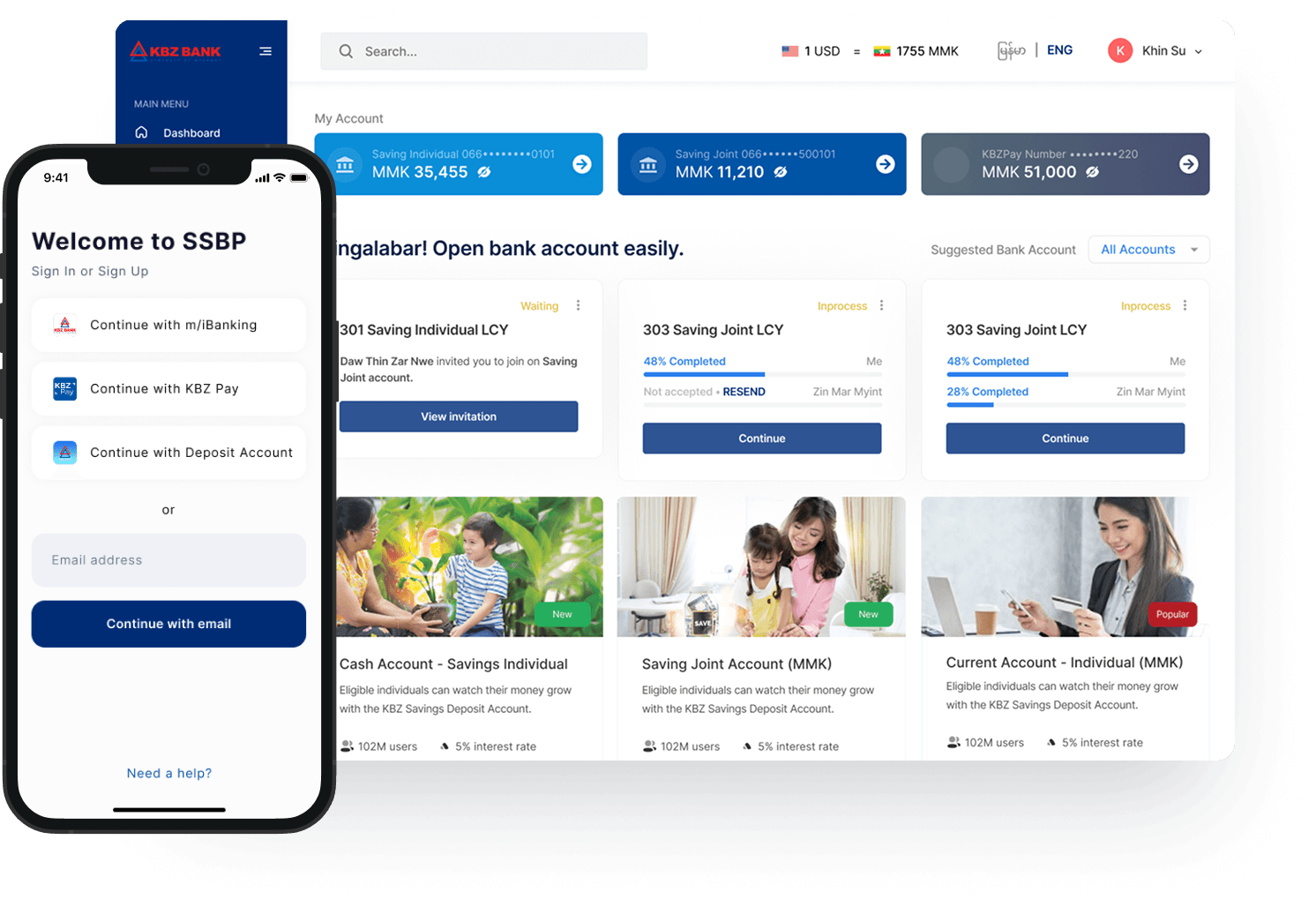
Project Overview
KBZ Bank set out to enable customers to open bank accounts digitally, reducing dependency on physical branches. However, onboarding in banking is inherently complex: requiring identity verification, regulatory compliance, and multiple layers of data validation.
My role was to design an onboarding experience that could handle this complexity while still feeling clear, guided, and trustworthy for users.
The Challenge
The onboarding flow was not a simple sign-up; it was a multi-step process with strict requirements and frequent failure points.
Users had to:
- Upload identity documents and complete biometric verification
- Fill in detailed personal, financial, and address information
- Provide introducer details (a unique banking requirement)
- Select branch and additional services
- Complete OTP verification and activation
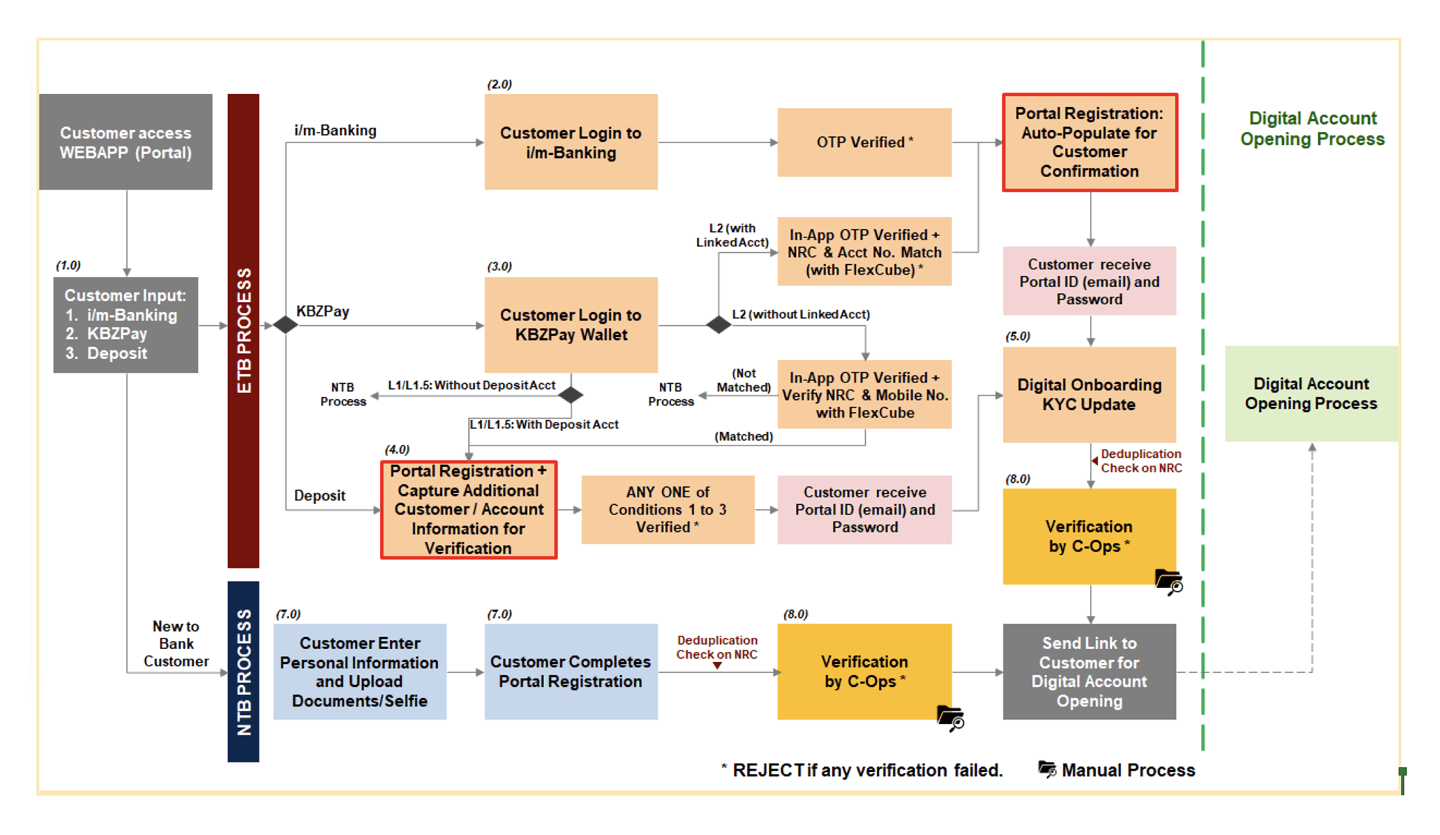
The biggest issue was not just the number of steps, but the lack of clarity in how the system works.
Users didn't understand:
- Why they needed to input so much data
- What would happen after identity verification
- How different systems (KBZPay, mobile/internet banking, bank account) were connected
Approach
Instead of simplifying only the UI, I focused on restructuring the onboarding logic, making the system behavior clearer and reducing unnecessary effort.
Designing a Structured Journey
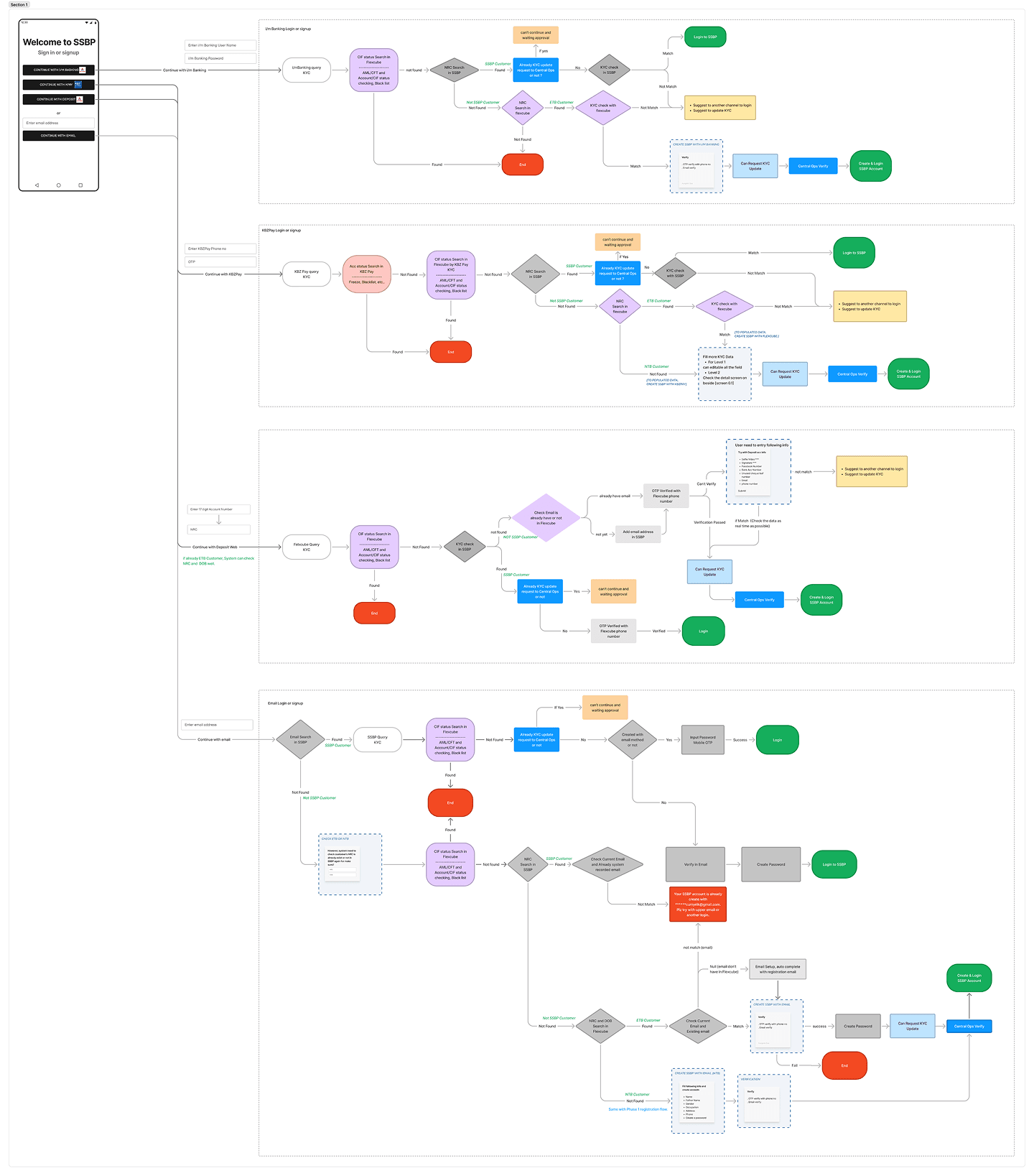
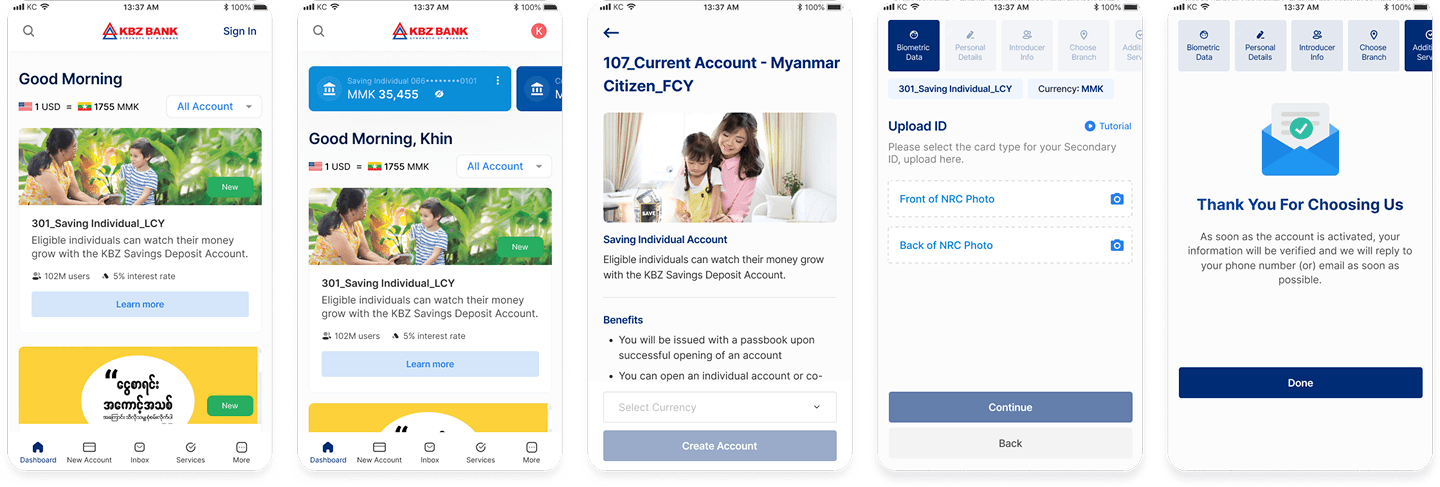
The onboarding process included multiple dependent steps, from identity capture to account activation. I redesigned the flow into a guided, progressive journey, where each step builds on the previous one and reduces user effort whenever possible.
Reducing Friction with Smart Data Reuse
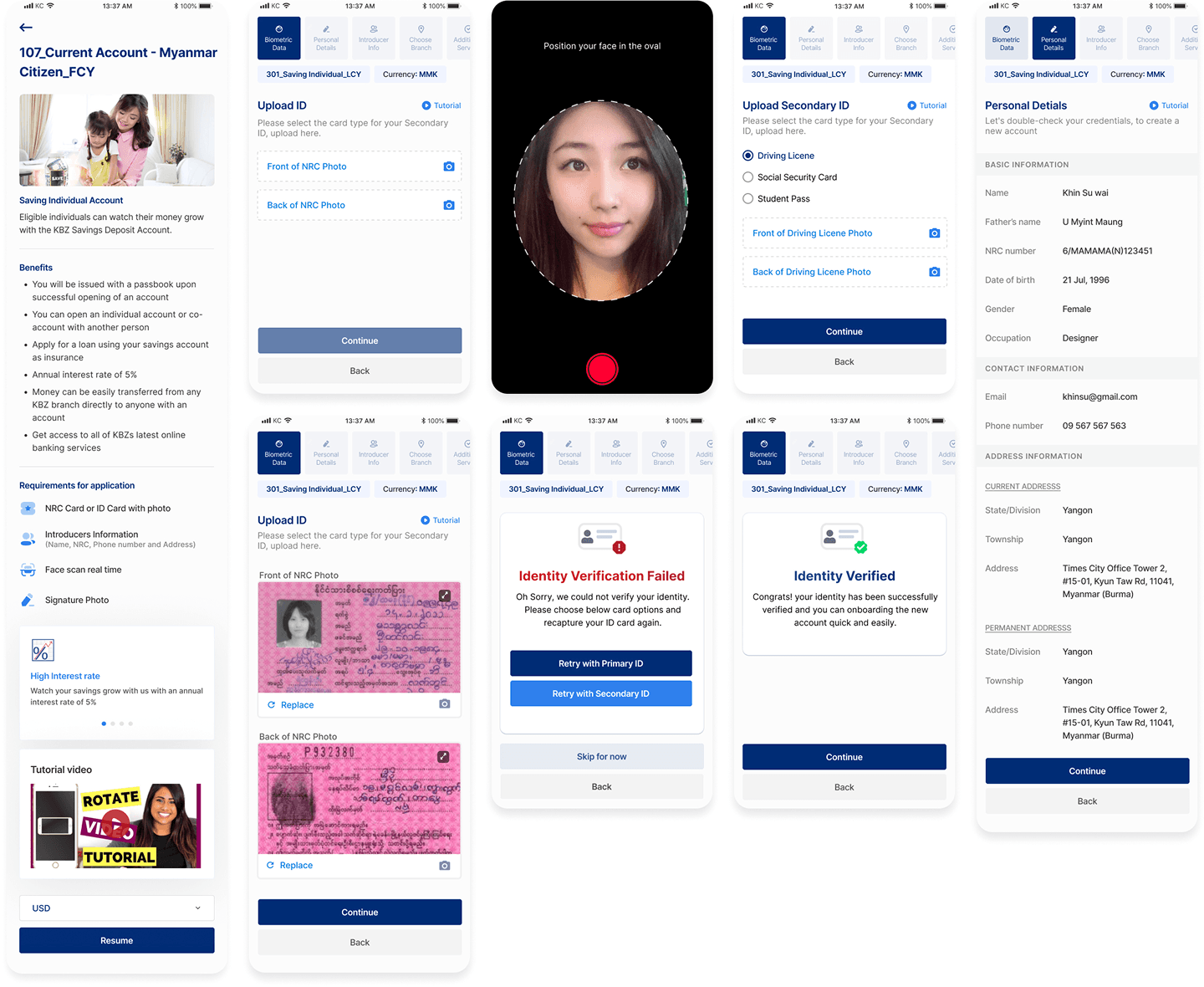
Rethinking how user data is handled was a key improvement. After successful biometric verification, the system retrieves and pre-fills existing customer data, allowing users to simply review and adjust before continuing.
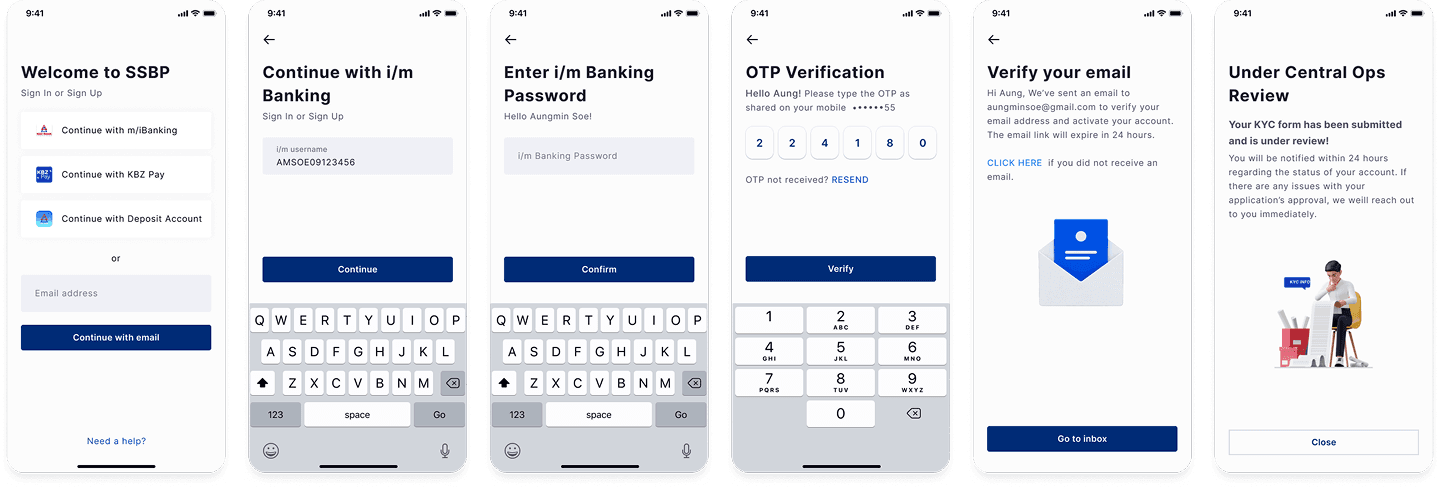
Creating a Multi-System Validation Flow
Authentication doesn't happen in a single step; it spans across multiple systems.
After onboarding, validation continues through different channels:
- KBZPay (KPay): OTP or biometric face verification
- Mobile / Internet Banking: OTP or biometric verification
- Bank Account Security: Verification through security question (hint answer)
I designed this as a connected validation journey, making it clearer how each step contributes to overall account security.
Designing for Real System States, Not Just Errors
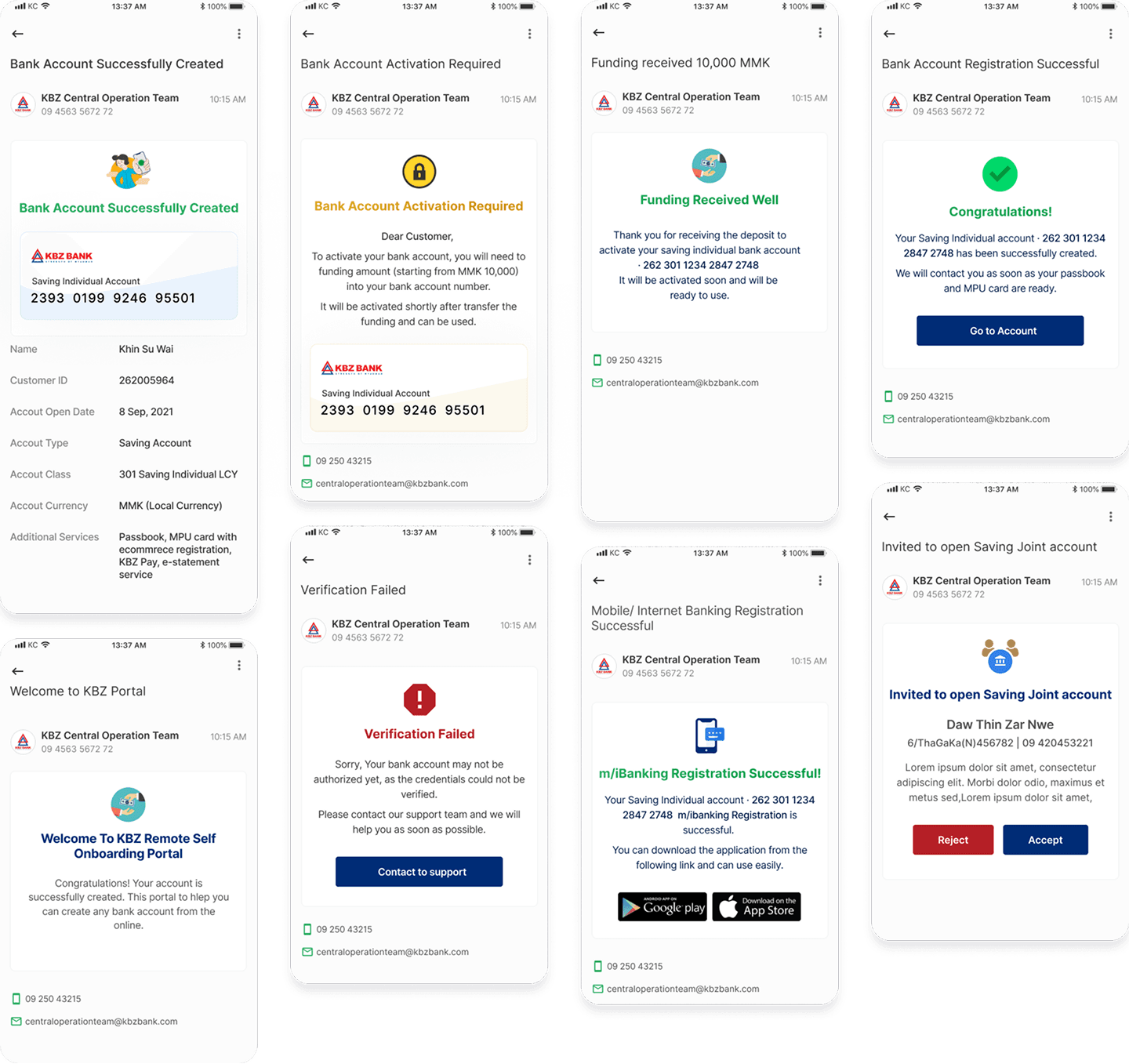
The onboarding journey doesn't end at submission; it continues through multiple system responses delivered via inbox notifications.
Users may encounter different outcomes such as:
- Account successfully created
- Activation required (pending funding)
- Funding received confirmation
- Verification failed
- Invitation to complete additional steps (e.g., joint account, mobile banking)
Final Activation & Offline Touchpoint
Even after completing digital onboarding, the journey doesn't fully end online.
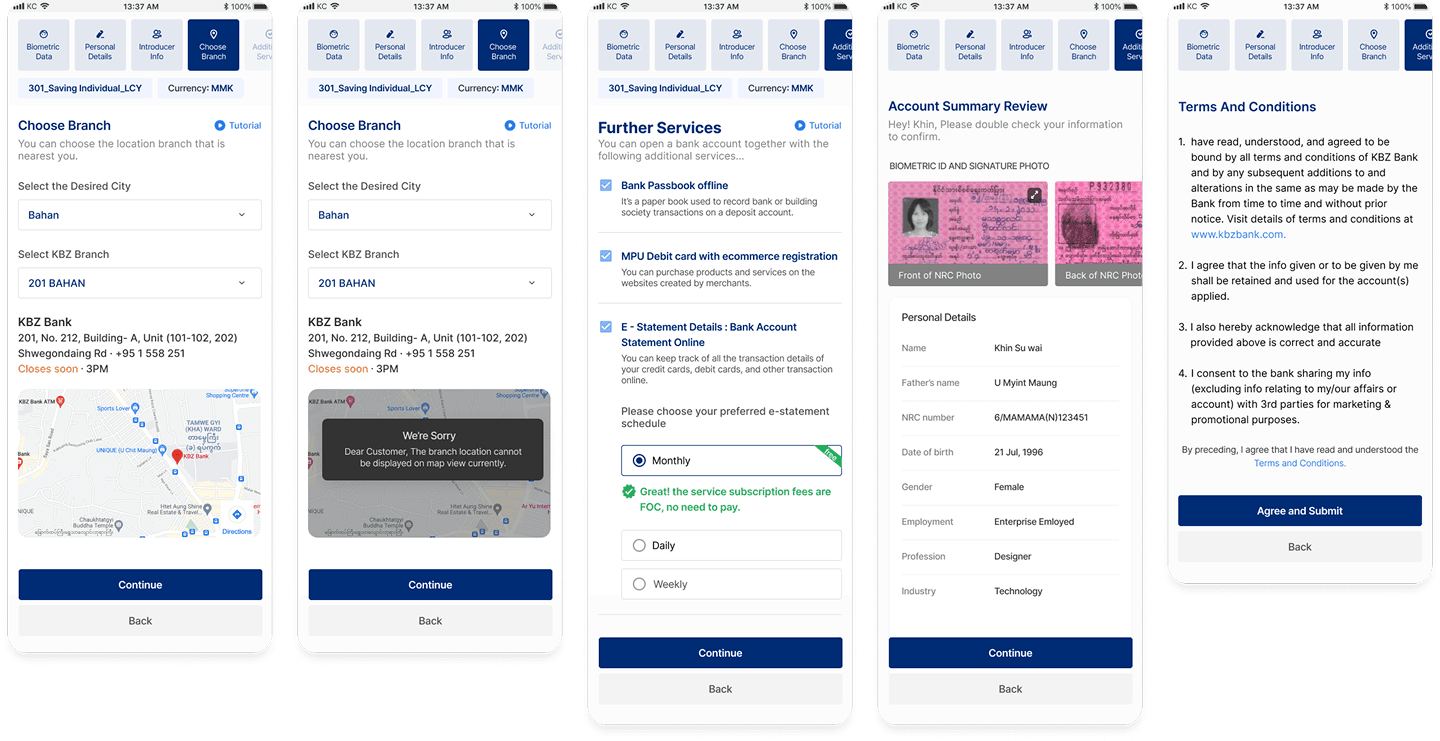
Users are required to visit a selected branch to collect their bank passbook, which remains an important part of banking operations.
To support this, I ensured:
- Branch selection is clearly integrated during onboarding
- Users understand the next step after activation
- The transition from digital to physical experience feels seamless
Outcome
The redesigned onboarding experience:
- Reduced manual data entry through smart data reuse
- Improved clarity across a complex, multi-system validation flow
- Increased user confidence with better guidance and feedback
- Made a long onboarding process feel more manageable
- Bridged digital onboarding with necessary offline banking steps
Reflection
This project shifted my perspective from designing screens to designing systems. I learned that in financial products, complexity cannot be removed, but it can be structured in a way users can navigate with confidence.
It also reinforced the importance of understanding how multiple systems interact, which is critical when designing real-world banking products.